Can Google Translate Be Used for Official Documents?
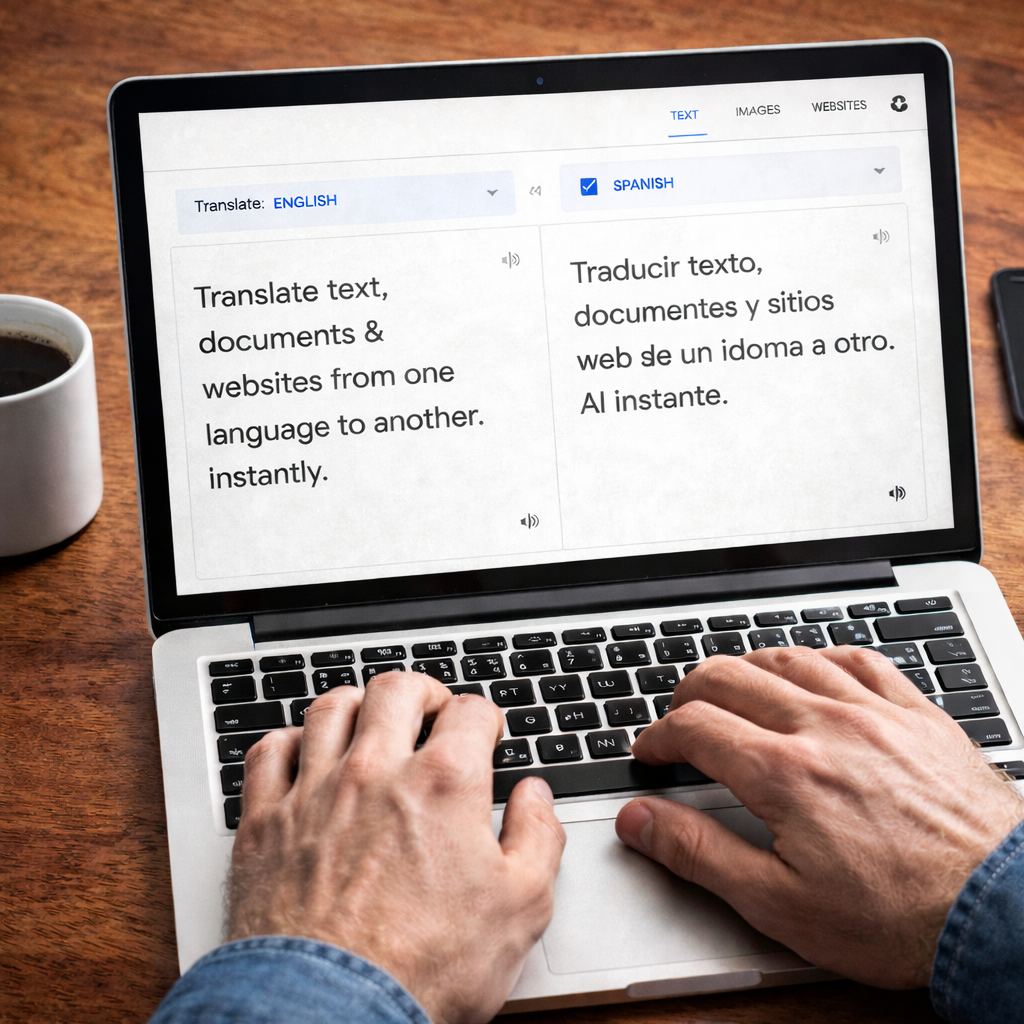
Online translation tools like Google Translate have become very popular because they are fast and free. Many people use them to translate emails, messages, and basic text.
But when it comes to official documents, many people wonder:
Can Google Translate be used for immigration, legal, or academic documents?
The short answer is no. While machine translation tools can help with general understanding, they are usually not accepted for official document submissions.
Why Google Translate Is Not Accepted for Official Documents
Machine translation tools like Google Translate rely on artificial intelligence to automatically convert text between languages. While the technology has improved significantly, official institutions typically require translations performed or reviewed by a human translator.
Most government agencies, universities, and courts require a certified translation.
For example, the U.S. Citizenship and Immigration Services requires that any foreign-language document submitted with an immigration application must include:
- A complete English translation
- A signed certification statement from the translator
- Confirmation that the translator is competent in both languages
Machine translation tools cannot provide this certification.
Common Problems With Machine Translation
Although machine translation can be helpful, it often produces mistakes that can cause serious issues in official documents.
Incorrect Names or Dates
Machine translation may misinterpret formatting, especially with names, dates, or official terminology.
Legal and Technical Errors
Legal and medical terminology often requires specialized knowledge that machine translation cannot always interpret correctly.
Missing Context
Machine translation tools may translate words literally without understanding cultural or contextual meaning.
Formatting Problems
Official documents often contain:
- Stamps
- Seals
- Handwritten notes
- Tables or official formatting
These elements must be translated and labeled correctly.
When Google Translate Can Be Helpful
Although it is not suitable for official documents, machine translation tools can still be useful in certain situations.
For example:
- Understanding the general meaning of a document
- Translating casual messages
- Reading foreign-language websites
- Basic communication when traveling
However, for official use, human review is essential.
What Is Required for Official Document Translation?
Official translations typically require certified translation.
A certified translation includes:
- The translated document
- A certification statement confirming accuracy
- The translator’s name and signature
This certification ensures that the translation can be trusted for official purposes.
Documents That Often Require Certified Translation
Common examples include:
- Birth certificates
- Marriage certificates
- Divorce decrees
- Academic transcripts
- Legal contracts
- Medical records
- Immigration documents
Accuracy is critical because even small errors can delay applications.
Professional Translation for Official Documents
If you need translation for immigration, legal, medical, or academic documents, professional translation services help ensure your documents meet official requirements.
Clear Bridge Language Solutions LLC provides certified translation services in more than 60 languages for immigration, legal, academic, and medical documents.
Clients can securely upload documents online and receive certified translations electronically.
Learn more at:
FAQ
Can Google Translate be used for USCIS documents?
No. The U.S. Citizenship and Immigration Services requires certified translations with a signed certification statement.
Is machine translation ever acceptable for official documents?
Generally no. Official institutions require translations verified by a qualified translator.
Can machine translation be used as a starting point?
Sometimes translators may use machine translation as a draft, but the final translation must always be reviewed and certified by a human translator.